Sound Insulation: How the Properties Differ Between Materials


Sound Insulation: How the Properties Differ Between Materials
Whether you live in a busy city flat, a semi-detached house, or a converted loft, unwanted noise can easily disturb your peace. Sound insulation plays a crucial role in creating a comfortable and quiet home environment. But not all materials perform the same way when it comes to blocking or absorbing sound. Each type of material has distinct properties that affect how it handles noise. Here’s an overview of how sound insulation varies between common materials – and how to choose the right one for your needs.
What Does Sound Insulation Actually Mean?
Sound insulation is about preventing sound from travelling from one space to another. This can happen in two main ways:
- Sound absorption, where the material soaks up and dampens sound waves, reducing echoes and reflections within a room.
- Sound reduction, where the material blocks sound from passing through walls, floors, or ceilings.
A material might be excellent at one of these functions but less effective at the other. Understanding the difference helps you select the right solution for your situation.
Dense Materials – Effective at Blocking Sound
Heavy, dense materials such as concrete, plasterboard, and brick are particularly good at stopping sound from passing through. The heavier a material is, the harder it is for sound waves to make it vibrate – and therefore to penetrate it.
- Concrete: Highly effective against low-frequency noise such as traffic or bass sounds, but difficult to modify in existing buildings.
- Plasterboard (drywall): A flexible option, especially when used in multiple layers with insulation in between. Adding extra layers significantly improves sound reduction.
- Brick: Offers solid sound insulation, though it can be challenging to integrate with lightweight modern structures.
Dense materials are ideal for keeping external noise out, but they don’t necessarily improve the acoustics inside a room.
Soft and Porous Materials – Effective at Absorbing Sound
Materials such as mineral wool, acoustic panels, and foam are excellent at absorbing sound. Their porous structure allows sound waves to enter and dissipate, reducing echo and reverberation.
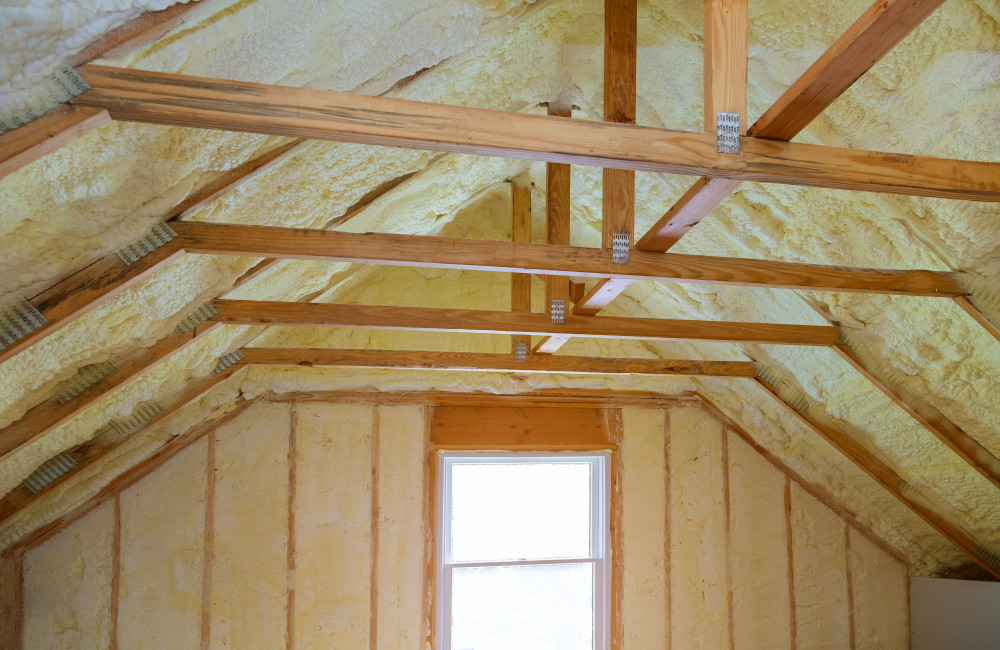
- Mineral wool (rock wool or glass wool): Commonly used in walls and ceilings, providing both thermal and acoustic insulation.
- Acoustic panels: Available in many designs and often installed on walls or ceilings to improve the sound quality of a space.
- Acoustic foam: Popular in studios and offices where controlling reflections and creating a balanced sound environment is important.
These materials don’t necessarily stop sound from travelling through a wall, but they make the space itself more pleasant to be in.
Combining Materials for the Best Results
The most effective sound insulation is often achieved by combining heavy and soft materials. A typical example is a plasterboard wall with mineral wool inside the cavity. The plasterboard blocks the sound, while the mineral wool absorbs vibrations and prevents resonance.
Another effective approach is the “mass-spring-mass” construction, where two dense layers are separated by an elastic or porous material. This design reduces the transfer of sound energy and provides significantly better insulation.
New Materials and Technologies
Sound insulation technology is evolving rapidly. Today, there are innovative solutions such as:
- Acoustic membranes – thin, flexible layers that can be installed between wall or floor layers to improve sound reduction without adding much thickness.
- Eco-friendly acoustic panels – made from recycled materials like wood fibre, hemp, or textiles, offering both sustainability and performance.
- Floating floors – where the floor surface is separated from the subfloor by an elastic layer, reducing impact noise such as footsteps.
These modern solutions make it easier to achieve good acoustic comfort, even in lightweight or open-plan buildings.
Læs også:
Choosing the Right Material
The best choice depends on the type of noise you want to reduce:
- Airborne noise (voices, music, traffic): requires dense materials and airtight construction.
- Impact noise (footsteps, vibrations): best reduced with elastic and shock-absorbing materials.
- Reverberation within a room: improved with sound-absorbing surfaces such as acoustic panels, curtains, or carpets.
For the best results, combine several methods and ensure that joints, doors, and windows are properly sealed. Even small gaps can significantly reduce the effectiveness of sound insulation.
Sound Insulation as Part of Everyday Comfort
Good sound insulation isn’t just about blocking noise – it’s about wellbeing. A home with pleasant acoustics feels calmer and more relaxing, helping to reduce stress and fatigue. That’s why it’s worth considering sound insulation as an essential part of overall home comfort, alongside heating, lighting, and ventilation.
Læs også: